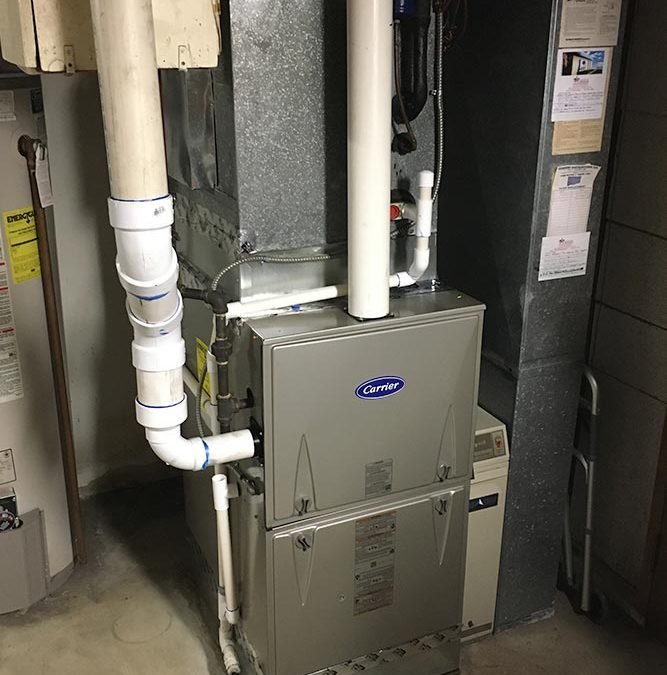
When your furnace stopped working, start with four checks: the thermostat setting, the furnace power switch, the circuit breaker, and the air filter. If those don’t restore heat, the cause is often a flame sensor, igniter, or safety switch. Call a technician right away if you smell gas or a carbon monoxide alarm sounds.
A furnace that quits in a New Hampshire winter is more than an inconvenience. The house cools quickly, pipes on outside walls can freeze, and the problem rarely waits for business hours. The good news is that many no-heat problems come down to simple causes you can check in a few minutes, such as a thermostat setting, a dirty filter, or a tripped switch.
This guide explains what to do when your furnace stopped working, in roughly the order a technician would check it. It covers the safe checks you can do yourself, the warning signs that mean you should stop and call a professional, and how to keep your home warm while you wait. It comes from the team at Awesome Air HVAC LLC, an HVAC company in Salem, NH that provides 24/7 emergency heating repair for homes and businesses.
One rule comes before everything else. If you smell gas or your carbon monoxide alarm is sounding, skip the checklist. Leave the house right away and call your gas utility or 911 from outside.
What Should You Check First When Your Furnace Stops Working?
Start with the thermostat, the furnace power switch, the circuit breaker, and the air filter. These checks take about ten minutes, need no tools, and do not require opening the furnace. They cover the most common simple reasons for a furnace not turning on.
- Thermostat. Make sure it is set to Heat, not Cool or Off. Set it a few degrees above the current room temperature. If the screen is blank, replace the batteries. On smart thermostats, check that a schedule or eco mode is not holding the temperature down.
- Furnace power switch. Most furnaces have a switch on or near the unit that looks like a regular light switch. It is easy to flip off by mistake. Make sure it is on.
- Circuit breaker. Check your electrical panel for a tripped furnace breaker. Reset it once. If it trips again, leave it off and call a professional, because a repeat trip points to an electrical fault.
- Air filter. A clogged filter restricts airflow. As a result, the furnace can overheat and shut itself down as a safety measure. Replace the filter if it looks gray or packed with dust.
- Front panel. Many furnaces have a safety switch that keeps the unit off when the front door panel is loose. Press the panel firmly into place.
After any change, give the system a few minutes. Most furnaces run a short startup sequence before the burners light and warm air comes out.
Why Is Your Furnace Running but Not Heating the House?
If the blower runs but the air stays cold, or the furnace starts and shuts off within minutes, the problem usually sits in the ignition or safety controls. Common causes include a dirty flame sensor, a failed igniter, an overheating safety switch, or a clogged condensate drain. Most of these need a technician.
Here is what each one means:
- Flame sensor. This small rod confirms that the burners have lit. When it gets coated with residue, the furnace cannot detect the flame and shuts off the gas. This often shows up as short cycling, where the furnace lights and then stops.
- Igniter or pilot light. Newer furnaces use an electronic igniter. Older ones use a standing pilot light. If either fails, the burners never light and the blower may push out cold air.
- High-limit switch. This switch turns off the burners when the furnace gets too hot. Blocked airflow from a dirty filter or closed vents is a frequent trigger.
- Condensate drain. High-efficiency furnaces produce water that drains through a small line. When that line clogs, a float switch can shut the furnace down.
There are also two quick checks worth doing. First, look at the gas valve on the pipe leading to the furnace. The handle should run in the same direction as the pipe. Second, if you heat with oil, check the tank level. Many homes in southern New Hampshire still use oil, and running out is a common cause of no heat in the house.
Most furnaces also have a small window with a blinking light on the control board. That light flashes an error code, and the code chart is usually printed inside the panel door. Write the code down for your technician.
Avoid resetting the furnace over and over. Many furnaces lock out after repeated failed starts. On an oil burner, press the reset button only once, since repeated presses can send extra oil into the combustion chamber.
Quick Facts: Furnace Not Working
- Simple causes to check first: thermostat setting, furnace switch, tripped breaker, clogged filter, loose front panel
- Common part failures: flame sensor, igniter, high-limit switch, blower motor, clogged condensate line
- Stop and call a professional: gas smell, carbon monoxide alarm, breaker trips twice, burning smell, water pooling near the furnace
- Never do: heat the house with an oven, stovetop, grill, or generator; press an oil burner reset more than once
- Have ready for the technician: fuel type, rough age of the furnace, any error code, and the steps you already tried
When Is a Furnace Problem an Emergency?
A furnace problem becomes an emergency when there is a safety risk or a risk of damage to your home. Gas smells, carbon monoxide alarms, burning or electrical odors, and dangerously cold indoor temperatures all count. In those cases, stop troubleshooting and call for help right away.
Carbon monoxide is the biggest concern. According to the CDC, gas and oil furnaces produce carbon monoxide, a gas you cannot see or smell, and it can be deadly without warning. For that reason, every home with a fuel-burning furnace should have working carbon monoxide alarms.
Call for emergency heating repair if you notice any of the following:
- A gas or rotten-egg smell near the furnace
- A carbon monoxide alarm going off
- A burning, melting, or electrical smell
- Loud bangs, grinding, or screeching from the unit
- Water leaking around the base of the furnace
- A breaker that keeps tripping
- Falling indoor temperatures with infants, older adults, or anyone with a health condition at home
- Signs that pipes may freeze, such as very low indoor temperatures during a cold snap
How Can You Keep Your House Warm Until the Heat Is Back?
Keep the heat you have in one part of the house and protect your pipes. Close doors to unused rooms, gather in one room, and use space heaters carefully. Never use a stove, oven, or grill as a heat source.
A few practical steps help:
- Close interior doors and gather the household in one room.
- Keep curtains closed at night. Open them on sunny windows during the day.
- Open cabinet doors under sinks on outside walls so warmer room air reaches the pipes.
- Let a faucet on an outside wall drip slowly to help prevent frozen pipes.
- Use space heaters with automatic tip-over shutoff. Plug them directly into a wall outlet, not an extension cord, and keep at least three feet of clear space around them.
- Layer clothing and blankets, especially at night.
These steps buy time. However, they are not a fix, so call for heating repair as soon as you know the problem is beyond the basic checks.
How Do You Get Emergency Heating Repair in Salem, NH?
Call a local heating contractor that answers around the clock, describe what you see, and share what you already checked. Awesome Air HVAC provides 24/7 emergency heating repair for homes in Salem, Windham, Atkinson, Hampstead, Derry, and nearby towns.
When you call, have a few details ready. Tell the technician your fuel type, the rough age of your furnace, any error code, and what you already tried. That information shortens the diagnosis and helps the technician bring the right parts.
Once the technician finds the cause, they should explain your options clearly. Many problems are a single part, such as a flame sensor or igniter. If an older furnace keeps breaking down, however, it may be worth comparing a repair against a new furnace or a heat pump installation. Our team handles both furnace repair and replacement for homes, and the same crew covers commercial heating repair for businesses.
If you are searching for emergency HVAC services in Salem, NH, you can call us directly or request service online and we will follow up.
Get Your Heat Back On
Most no-heat calls start with a few simple checks: the thermostat, the power switch, the breaker, and the filter. When those do not work, or you notice a safety warning sign, it is time for a professional. Awesome Air HVAC offers 24/7 emergency heating repair and furnace repair in Salem, NH and nearby towns. Call us anytime to get your home warm again.
FAQs
Why did my furnace suddenly stop working?
The most common causes are a thermostat set wrong, a tripped breaker, a furnace switch turned off, or a clogged air filter. If those check out, the problem is often a dirty flame sensor, a failed igniter, or a safety switch that shut the furnace down.
Why is my furnace running but blowing cold air?
Cold air usually means the burners are not lighting or are shutting off early. A dirty flame sensor, a failed igniter, a closed gas valve, or an empty oil tank can all cause it. If basic checks don’t fix it, call a technician.
Is it safe to reset my furnace?
Resetting once is generally fine. Repeated resets can trigger a lockout. On an oil burner, extra presses can push excess oil into the combustion chamber. If one reset does not work, call a professional.
Who provides emergency heating repair in Salem, NH?
Awesome Air HVAC provides 24/7 emergency heating repair for homes and businesses in Salem, NH and nearby towns, including Windham, Atkinson, Hampstead, and Derry. You can call or request service online.